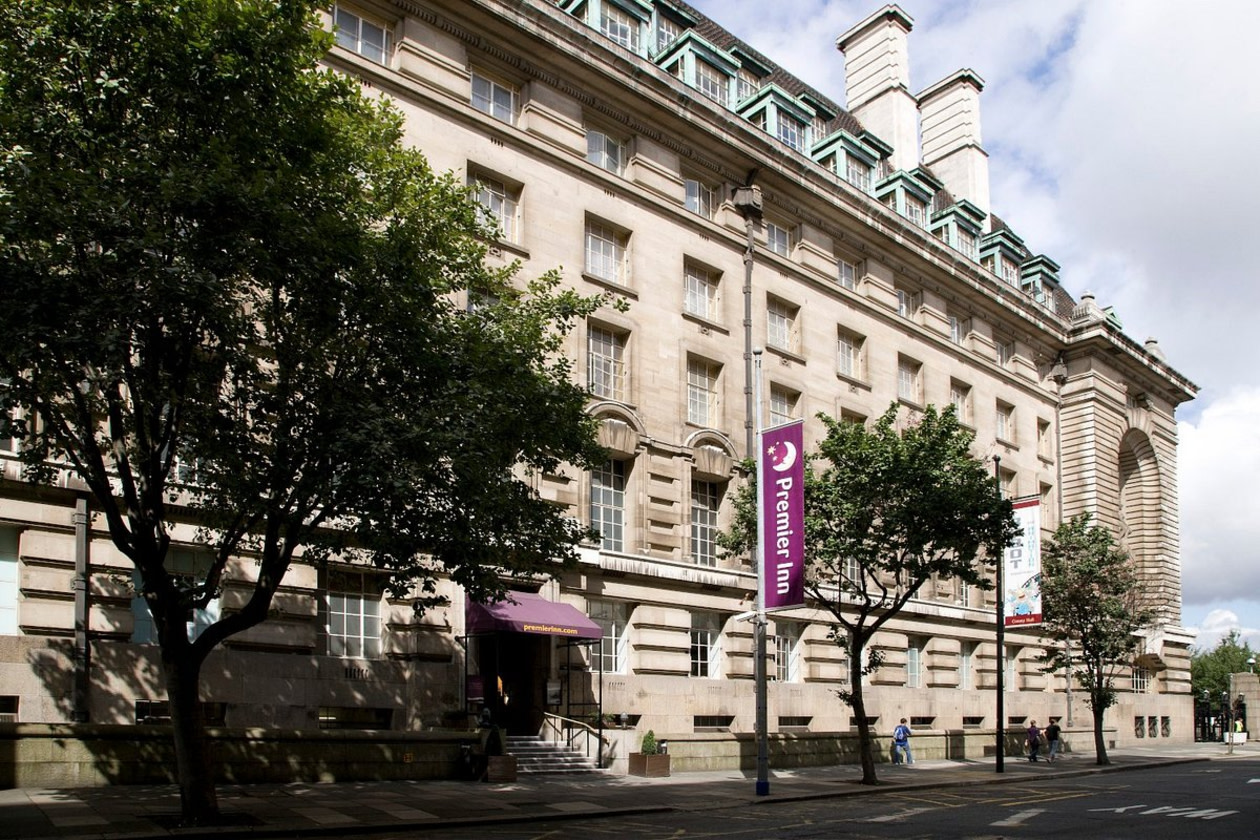


Whitbread’s full-year revenue came in flat at £2.9bn. Growth in UK and German accommodation sales offset the fall in food and beverage revenues that accompanied branded restaurant disposals.
Underlying cash profit (EBITDAR) grew by 4% to £1.1bn, despite higher-than-expected cost inflation in the core UK business.
Free cash flow decreased from £0.4bn to £0.1bn, reflecting increased capital expenditure. Net debt, including leases, grew by £0.5bn to £5.2bn.
The final dividend was held flat at 60.6p per share.
Accommodation sales are up so far this year, but net inflation guidance in the UK has moved to the top of the previous 3-4% range. The ongoing restaurant disposal plan is expected to drive a £40mn hit to the bottom line.
The shares were down 3.1% in early trading.
Our view
Whitbread’s full-year scorecard was solid enough against a backdrop of sluggish demand and significant cost pressures. Sales so far this year are going the right way, but the absence of a new buyback and cost inflation moving to the top end of its guidance range was greeted with some trepidation by investors.
Premier Inn remains a powerful brand, with an impressive track record of market outperformance. It’s already the market leader in its home market of the UK, but structural shifts in the hotel industry here mean there’s still an opportunity to take more market share. Targets for new openings have been scaled back, but we support the sharper focus on higher-returning locations and formats such as Premier Inn hub, which provides compact rooms in popular city centres.
With the group’s net UK cost inflation running close to 4% after mitigations, profit growth is likely to be a challenge this year. If consumer sentiment weakens, that pressure will intensify further. Weakening economic signals and high oil prices are rarely positive for the hospitality industry.
That puts greater pressure on the board to drive further efficiencies. Enter the group’s updated five-year plan that builds on earlier initiatives to integrate its restaurants into Premier Inn, which provides a captive audience of diners. On first glance, the measures look well thought through, but the benefits won’t be felt for a few years yet, and execution will be critical.
Plans to reduce investment spending and release capital from the real estate portfolio, along with a £250mn increase in planned cost savings, underpin targets to distribute £2bn of free cash flow to investors by 2031.
However, management is yet to introduce a buyback this year, and no shareholder payouts can be guaranteed. If hotel demand weakens, some of that cash may be required to keep net debt within the target range. There’s also a risk that the reduced investment spend will cause Whitbread to lose its competitive edge.
The newer German division is making good progress in an exciting market and has just exited loss-making territory. However, it’s taking longer than expected to make a meaningful contribution to the bottom line.
We think Whitbread is a shrewd operator, and the current valuation weakness would normally be seen as an attractive entry point. While the revised strategy should further bolster the group’s financial resilience, the benefits will take time to be felt, with the majority of the expected improvement in profitability not expected until 2031. In the meantime, with demand and margins under pressure, the chance of disappointments remains high.
Environmental, social and governance (ESG) risk
Consumer services companies are medium-risk in terms of ESG, and very few companies are excelling at managing them. That leaves plenty of opportunity for forward-thinking firms. The primary risk-driver is product governance. The impact of their products on society, labour relations and environmental concerns are also key risks to monitor.
Whitbread's management of material ESG issues is strong according to Sustainalytics. Human capital management is considered above average with a strong development program in place. The company has appointed a management committee for overseeing ESG issues, but reporting is not in accordance with leading standards. As the owner of the UK's largest hotel chain, we would like to see an improvement in carbon intensity, and clearer targets on reducing its water usage. Further, management of product governance has been called out as average with no evidence that Whitbread's hotels and restaurants have received external quality certifications.
Whitbread key facts
All ratios are sourced from LSEG Datastream, based on previous day’s closing values. Please remember yields are variable and not a reliable indicator of future income. Keep in mind key figures shouldn’t be looked at on their own – it’s important to understand the big picture.
This article is original Hargreaves Lansdown content, published by Hargreaves Lansdown. It was correct as at the date of publication, and our views may have changed since then. Unless otherwise stated estimates, including prospective yields, are a consensus of analyst forecasts provided by LSEG. These estimates are not a reliable indicator of future performance. Yields are variable and not guaranteed. Investments rise and fall in value so investors could make a loss.
This article is not advice or a recommendation to buy, sell or hold any investment. No view is given on the present or future value or price of any investment, and investors should form their own view on any proposed investment.