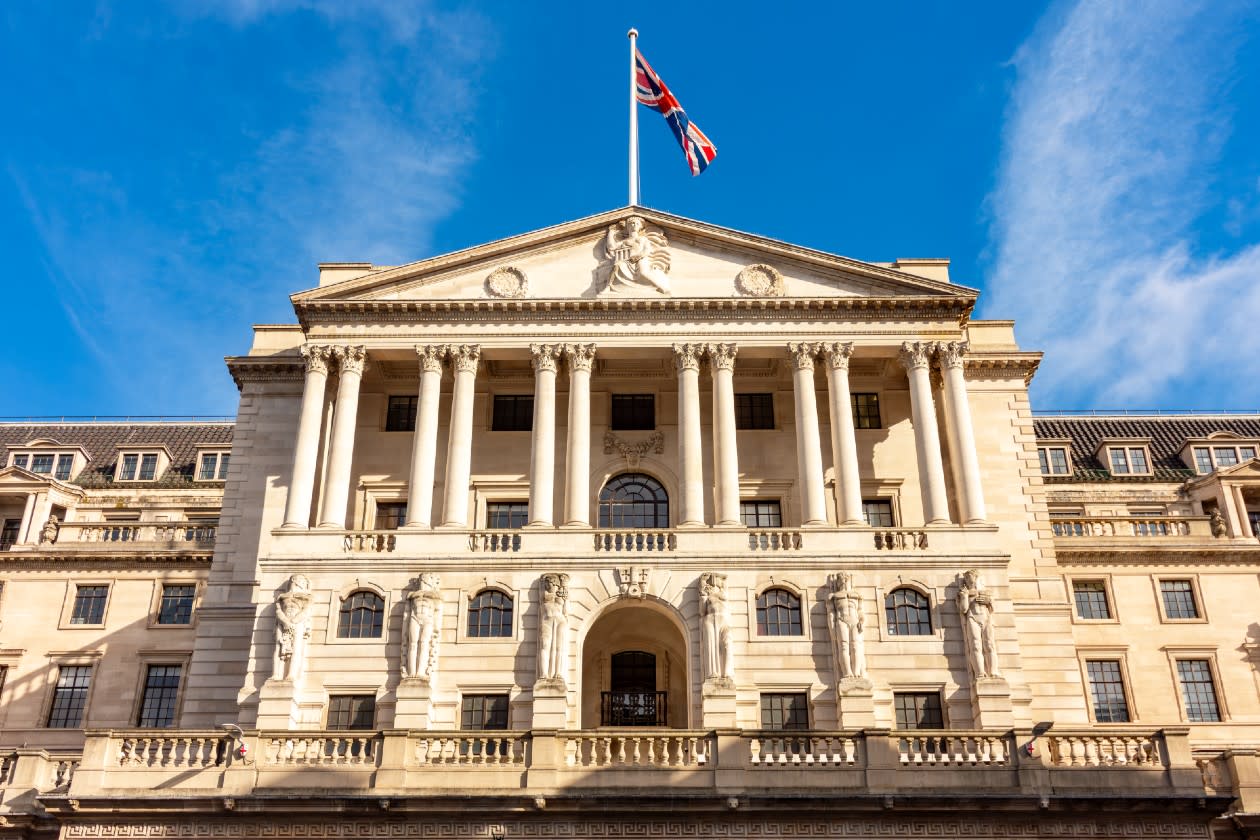


Last week the Bank of England chose to hold the interest rate at 3.75% for the third time in a row. While the headline rate may not have changed, your financial outlook could already look a little different.
Markets will be using economic data to try to price in the direction of travel for interest rates in 2026, but with ongoing global geopolitical instability – in particular a question mark hanging over how long the conflict in Iran will continue – forecasting isn’t straightforward.
Just a few months ago there was a consensus that interest rates would fall over the year. But the Iran conflict, the knock-on effect on energy prices, and resulting inflationary pressures mean the outlook has become clouded. Rates may now stay higher for longer, with any potential cuts pushed down the track.
Interest rates – whether rising, falling, or frozen – quietly shape your financial life. From everyday finances to the returns you earn on your savings, income in retirement, as well as the performance of your investments, even small shifts can have a big impact.
The next rate decision is on 18 June. The big question is – what does all this mean for your money and is it time to act?
This article isn’t personal advice. Remember, investments rise and fall in value, so you could get back less than you invest. Investing for 5+ years increases your chances of positive returns compared to cash savings. Past performance isn’t a guide to the future. If you’re not sure if an investment’s right for you, ask for financial advice.
Savings – put your cash to work
Higher interest rates are good news for savers but only if you’re taking advantage of them. Easy access Cash ISAs are offering inflation-busting returns around 4.2-4.5%, while one-year fixes are as high as 4.65%. There are also some short-term fixes of around six months available, offering you a middle ground between returns and flexibility.
Competition is being driven by challenger banks, and there’s a big spread between the top and bottom of the market as providers wait to see what rates will do next. So, it pays to shop around rather than defaulting to your high street bank. Staying put can quietly cost you.
With higher interest rates on the table, making use of your ISA allowance is more important than ever – especially in today’s higher tax environment. Any savings interest earned inside an ISA is tax-free, meaning you keep every penny. Not just today, but year after year, making it a powerful tool for building wealth. ISA and tax rules can change, and benefits depend on your circumstances.
Interest earned outside an ISA over the personal savings allowance – £1,000 for basic rate taxpayers and £500 for higher rate taxpayers – will be subject to income tax at 20% and 40% respectively. Additional rate taxpayers pay tax on every pound of interest outside of an ISA at 45%. And from April 2027 tax rates on interest will rise by 2%, making it 22% for basic rate, 42% for higher rate and 47% for additional rate taxpayers.
If you’re considering a longer-term fix, only put away money you can comfortably set aside and won’t need soon because until maturity, that money will be locked away. A sensible approach can be to split your savings, locking away a portion to secure higher rates, while keeping some funds easily accessible for flexibility.
Annuities – a window of opportunity
Annuity rates are strongly influenced by interest rates, so with expectations that rates will remain higher for longer, annuity incomes are sitting near historic highs. Welcome news if you’re approaching or in retirement and looking to turn your pension into a guaranteed income.


The latest data from HL’s annuity search engine shows a 65-year-old living in an average postcode, with a £100,000 pension can get up to £7,830 per year from a single life level annuity with a five-year guarantee paid monthly in advance. Looking back and it’s come on leaps and bounds from £4,882 in April 2021.
If interest rates fall later this year, annuity rates may fall too, typically meaning you’ll get a lower annual income in exchange for your pension pot.
But think it through before making a move, once purchased an annuity cannot be unwound, so it’s important you research before committing. A whole of market annuity comparison tool can be a great place to start, as rates vary between providers, so shopping around can have a meaningful difference on your retirement income.
It’s also worth remembering that you don’t have to commit everything at once. You can buy annuities in stages, using part of your pension to purchase an annuity now, and do the same again later in your retirement.
There are a few other things you should think about before committing though. Annuity quotes are also only guaranteed for a limited time and rates can change regularly.
It’s also possible to mix and match approaches, for example, you might use some of your pension to purchase an annuity and secure a guaranteed income to cover essential costs, while keeping the rest invested with the potential to grow, withdrawing it flexibly through income drawdown as needed. But remember, investments can go up and down in value, so you could get back less than you invest.
The government’s free Pension Wise service can help if you’re over 50 and need guidance about your retirement options.
Investing with higher interest rates
Interest rate changes should in theory impact all investments. Although inflation erodes the spending power of cash over time, cash is considered ‘risk free’, so the rate of return on cash is still the reference point that all other investments should be compared against. Investments come with the potential for loss, so the expected returns on them need to be higher than cash – otherwise, why not just leave it as cash?
Gilts – UK government bonds – are a great example of this. Gilt yields move as interest rates (and expectations) do. If rates go up, so do gilt yields (and prices go down because gilt prices move in the opposite direction to yields). The reverse is also true.
Gilt yields have been volatile recently due to the uncertainty around inflation and future interest rate changes.
This has created opportunities, with gilt yields reaching highs not seen in decades. And this could be particularly attractive for investors who’ve used their tax efficient savings allowances, because capital gains on directly owned gilts are not subject to capital gains tax. With some gilts available where most of the return comes from a capital gain, this benefit adds to the appeal, particularly for higher rate income taxpayers who pay the most tax on savings interest.
Interest rates also impact potential returns on other bonds, like those issued by companies, too. And following the rate rises in recent years, bond yields have increased. This has increased the potential future returns from bond funds too.
Here are two fund ideas that offer bond exposure.
Investing in these funds isn't right for everyone. Investors should only invest if the fund's objectives are aligned with their own, and there's a specific need for the type of investment being made. Investors should understand the specific risks of a fund before they invest and make sure any new investment forms part of a long-term diversified portfolio. Unlike investing directly in bonds and gilts, investing in funds can be subject to capital gains tax (CGT).
For more details on each fund, its charges, and specific risks, see the links to their factsheets and key investor information.
JPM Global Bond Opportunities
The JPM Global Bond Opportunities fund gives investors access to the best bond ideas from JPMorgan, and aims to achieve a balance between income and capital growth over the long term (at least five years).
It’s extremely diversified with typically more than 1,000 bonds, invested across 15 different parts of global fixed income markets, from over 50 different countries. This means performance isn’t as closely linked to UK interest rates as some other bond funds, but interest rate changes from other countries (specifically the US) could have a greater impact on future returns.
We think this helps provide diversification within an investment portfolio and especially one that’s UK focused or includes individual gilts.
The fund invests in high yield bonds, emerging market bonds, currencies and uses derivatives, all of which add risk.
The fund had a 6.11% yield as of 31 March 2026. Yields are variable and aren’t a reliable indicator of future income.
Royal London Corporate Bond
Royal London Corporate Bond focuses on investment grade bonds (those with good credit ratings) issued by companies and aims to provide income alongside some capital growth. We think it’s a more adventurous choice in the space which could lead to greater returns, but making it more volatile than other bond funds.
The focus on bonds issued in sterling means that performance is more closely linked to UK interest rate changes than other funds investing more globally. As it’s focused on company bonds, it could diversify a shares focused portfolio or one that invests directly in gilts. Or it could also diversify an income focused portfolio.
The fund invests in high yield and unrated bonds, which adds risk. Charges are taken from capital which increased the income paid but reduces the potential for capital growth.
The fund had a 6.49% yield as of 31 March 2026.