Personal Pension
Take control of your retirement savings
Important information - Personal pension investors need to be happy to make their own investment decisions, and understand that investments can rise and fall in value. It’s possible to get back less than you pay in. You’ll usually need to be at least 55 (rising to 57 from 2028) before you can access the money in your pension. Pension and tax rules can change and any benefits will depend on your circumstances. Before transferring a pension you should always check the costs involved first and whether you’d lose any valuable benefits. The information on our website is not personal advice. If you’re not sure what’s best for your situation, you should seek financial advice.
What is a personal pension?
A personal pension, sometimes known as a “private pension”, is a long-term investment plan you set up yourself and build up over your working life.
It’s there to help provide you with enough income to live off when you retire or decide to work less. It also offers favourable tax treatment compared to some other ways of saving.
The term “personal pension” can be used in different ways. Here, we’re referring to any pension that isn’t the State Pension or an occupational scheme. Two common types of personal pension are stakeholder pensions and Self-Invested Personal Pensions (SIPPs).
The amount of money you’ll get from a personal pension will usually depend on how much you’ve paid in, how your pension fund’s investments have performed over time, and which option you choose to withdraw your funds at retirement.
Common types of personal pensions
Self-Invested Personal Pensions (SIPPs)
SIPPs are a modern type of personal pension that allow you to choose from a wide range of investments.
With a SIPP, you’ll have the freedom to invest where you want and actively manage your portfolio. This flexible approach is great for someone who wants to take control of their pensions.
Stakeholder pensions
Stakeholder pensions are a straightforward type of personal pension with low minimum contributions, capped charges and typically limited investment options. They also have a default investment strategy - useful if you don’t want to be making the investment decisions, but it’s a ‘one-size-fits-all’ approach to investing.
Is a personal pension right for me?
The suitability of a personal pension will depend entirely on your circumstances.
For some, a personal pension can be a useful way to combine their existing pension pots and cut down on paperwork – or simply top up their retirement savings tax-efficiently alongside their existing workplace pension. If you have access to a workplace pension, make sure you’re maximising any employer contributions before deciding whether to pay into a personal pension.
For others, saving for retirement can fall entirely on your shoulders - such as if you’re self-employed - so there’s no employer to set up a pension or make payments on your behalf. In these circumstances, the onus is on you to save for retirement.
How much can I pay into a personal pension?
If you’re a UK resident under 75, you can usually pay in as much as you earn, up to £60,000 a year, and get tax relief.
You may be able to pay in more than £60,000 if you have unused allowance from previous years. Tax rules can change and any benefits depend on personal circumstances.

Should I combine my personal pensions?
It’s important you’re in control of your pension savings, particularly as you approach retirement. Depending on your needs and the kind of pension you have, it could make sense to consolidate your pensions in one easy-to-manage account, like the HL Self-Invested Personal Pension.
Join over 460,000 clients already using the HL SIPP
Security - We're trusted by over 2 million clients and regulated by the Financial Conduct Authority
Award-winning - We've won over 200 awards across the HL service, including Best Buy Pension 2024 at the Boring Money Best Buys Awards
Ease - Check your SIPP anytime online or with the award-winning HL app, plus ongoing support from our friendly, UK-based helpdesk
Flexibility - With the HL SIPP, you’re free to pick your own investments, select one of our ready-made portfolios, or pay a financial adviser to choose investments for you
Expertise - Over 40 years’ experience in empowering people to save and invest with confidence
Great value for money - Free research, the latest investment news, tools and insight from our team of experts
SIPP charges
The HL SIPP is free to set up and low cost to run. Our yearly charge for holding investments is never more than 0.35%. Some investments will have their own annual charges, so please check these first before you invest.
Dealing charges depend on the type of investment and how often you trade.
FAQs
Money in your personal pension is usually locked away until you’re 55 (57 from 2028). But any time after that, you can start to withdraw money, even if you’re still working.
Use your personal pension to buy a guaranteed income for life (an annuity), or keep it invested and make withdrawals as and when you need to (either via UFPLS or pension drawdown). Plus, get up to 25% tax free - all other income withdrawals are taxable.
What you do with your pension is an important decision that you might not be able to change. You should check you're making the right decision for your circumstances and that you understand all your options and their risks. The government's free and impartial Pension Wise service can help you and we can offer you financial advice if you’d like it.
Yes, you can transfer personal pensions from other providers into the HL SIPP.
Combining your pots could make your pensions easier to manage. But you should contact your current provider to check a few things first:
Ask if you’ll need to pay any fees to transfer away
Check you won’t be forfeiting any valuable benefits or guarantees
Find out if your pension will be transferred as cash or stock (you might not have a choice)
With an HL SIPP, you can choose your own investments to create your own portfolio.
A portfolio is a collection of investments. It can include a mix of shares, funds, and other investments.
Or you can choose a ready-made portfolio to hold in your SIPP, and leave the choice of investments to us. You'll just need to keep an eye on it to make sure it's still right for you over time.
You can open a Self-Invested Personal Pension with HL if you’re over the age of 18 and UK resident for tax purposes. You should also be:
Comfortable choosing your own investments
Confident making long-term investment decisions
Free from significant debt (other than a mortgage)
Clear on our charges
Investments fall as well as rise in value, so you could get back less than you put in. If you’re not sure which investments are right for you, please ask us about financial advice.
With the HL SIPP, you can set up monthly payments from as little as £25, or make one-off payments of £100 or more.
You can change your pension contributions whenever you like.
Pension essentials
What are the different types of pension?
There are a number of different pension types in the UK. One way to categorise them is into private pensions, workplace pensions, and the State Pension.

6 pensions you shouldn't transfer
Some pensions are typically better off left where they are. We explain what kind of pensions these are likely to be and how to find out if you have one.
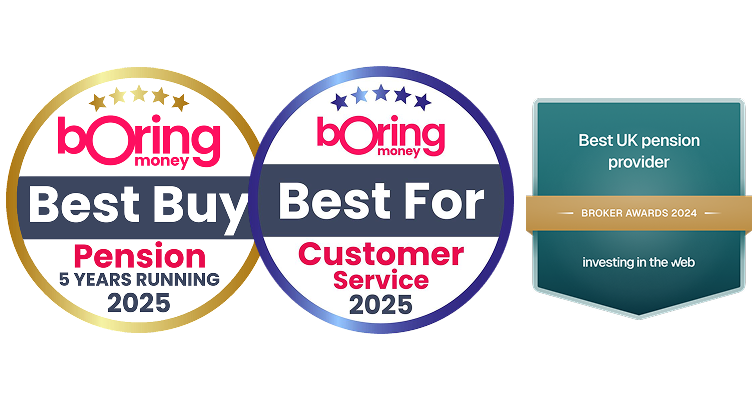
We've won over 200 awards for our services
Best Buy Pension 5 years running
- Boring Money Best Buys 2025
Best for Customer Service
- Boring Money Best Buys 2025
Best UK Pension Provider
- Investing in the Web's Global Broker Awards 2024
Help and support
Take a look at our most frequently asked questions for quick answers.
If you need more assistance or have specific questions, please contact us.