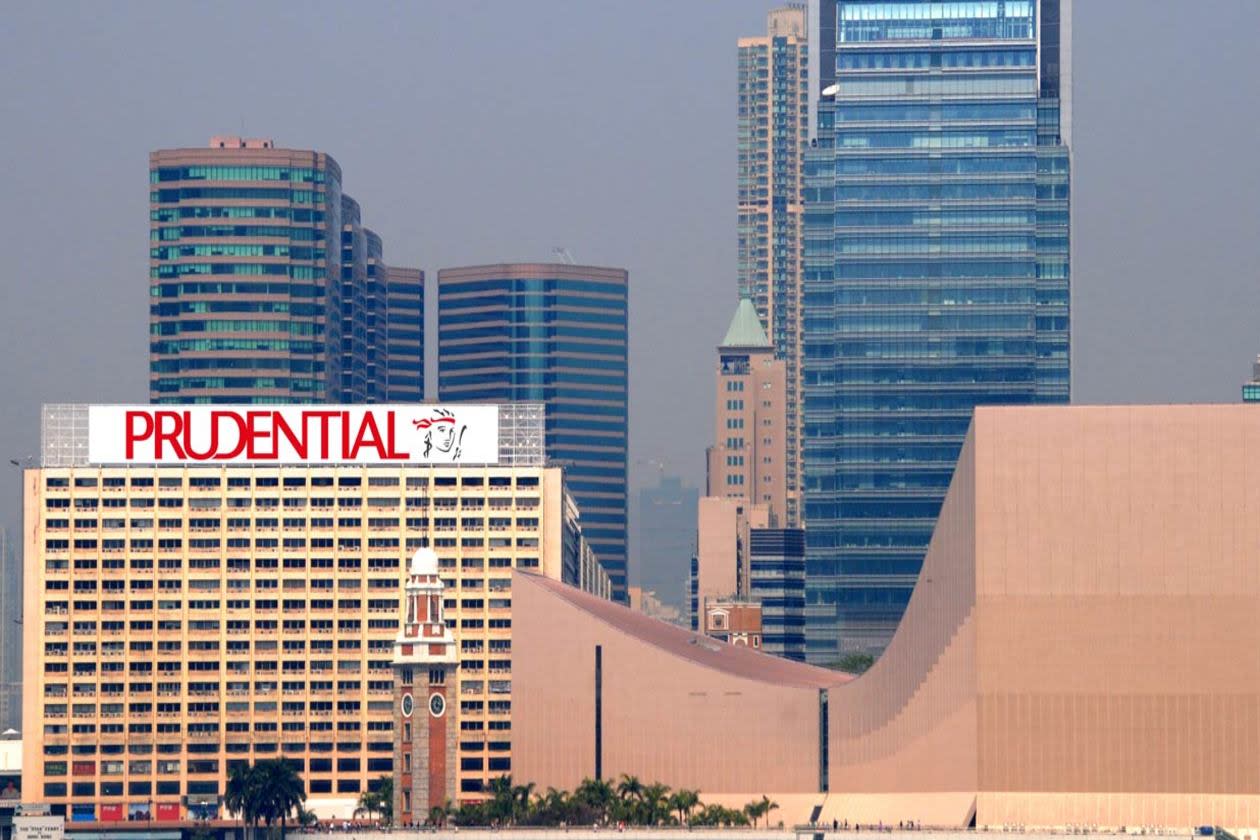


Prudential reported third-quarter annual premium equivalent (APE) sales of $1.6bn, down 6% on a constant currency basis.
New business profit rose 1% to $709mn, taking the year-to-date total to $2.1bn, up 6%. Excluding China, new business profit grew 13% in the quarter. New business margins improved by 3 percentage points to 44%.
Eastspring's funds under management stood at $286bn at the end of September, down from $291bn at the end of June.
Management said hitting its 2026 new business profit guidance is now harder than expected, with China set to be 10-15% lower than last year.
The shares were broadly flat in early trading.
Our view
The Prudential investment case rests on turning an expanding Asian middle class into cash for shareholders. Third-quarter numbers looked soft at the headline level, with new business profit up just 1%. But strip out mainland China and growth was a much healthier 13%.
China is where the pressure sits. Regulatory changes to how insurers sell through banks, plus a tough comparison with last year, saw new business profit there fall sharply. The recovery is taking longer than hoped, and management now concedes double-digit group growth this year is more of a stretch. That was largely flagged in advance, though, and momentum picked up in September and October, with China expected to return to growth in the final quarter.
Hong Kong is still the engine room, where Prudential's life and health cover for mainland Chinese visitors holds a market-leading position. New business profit grew by double digits in the quarter, driven by better margins rather than higher sales, as repricing continues to land well. Some visitor business is converting more slowly, so the final quarter is an important checkpoint. Worries about a regulatory clampdown on those cross-border sales still look overdone to us.
Elsewhere, Singapore and Indonesia slipped slightly, though Singapore is targeting a return to growth in the final quarter. Malaysia and the wider growth markets delivered double-digit growth. India is the one to watch, where Prudential is buying a controlling stake in Bharti Life and building out health insurance in a market where cover is still thin on the ground.
Eastspring, the asset management arm, is a useful diversifier. Funds under management stand at around $286bn, helped by demand for Asian exposure, and it earns fees managing premiums from the insurance business.
The balance sheet is in good shape, and capital generation, which is key to funding dividends and buybacks, has been building faster than expected. Alongside the modest dividend, $1.5bn of shares are set to be bought back this year, with more pencilled in for next. It's not a big yielder, though, and nothing's guaranteed.
We think Prudential's Asian focus and higher growth opportunities give a different option for a UK investor. But this year’s growth targets look stretched and 2027’s medium term target looks to be under some pressure too. We’d like to see evidence that a rebound in China is sustainable before getting more positive.
Environmental, social and governance (ESG) risk
The financials sector is medium-risk in terms of ESG. Product governance is the largest risk for most companies, especially those in the US and Europe with enhanced regulatory scrutiny. Data privacy and security is also an increasingly important risk for banks and diversified financial firms. Business ethics, ESG integration and labour relations are also worth monitoring.
According to Sustainalytics, Prudential’s management of material ESG issues is strong.
Prudential trains sales employees annually on responsible marketing and has strong policies for data privacy and security. The company invests in digital products to enhance customer experience but does not disclose customer complaint details. While it offers thorough training on ethics and corruption, and also provides whistleblower protections, Prudential lacks ethical risk assessments in investment and product development.
Prudential key facts
All ratios are sourced from LSEG Datastream, based on previous day’s closing values. Please remember yields are variable and not a reliable indicator of future income. Keep in mind key figures shouldn’t be looked at on their own – it’s important to understand the big picture.
This article is original Hargreaves Lansdown content, published by Hargreaves Lansdown. It was correct as at the date of publication, and our views may have changed since then. Unless otherwise stated estimates, including prospective yields, are a consensus of analyst forecasts provided by LSEG. These estimates are not a reliable indicator of future performance. Yields are variable and not guaranteed. Investments rise and fall in value so investors could make a loss.
This article is not advice or a recommendation to buy, sell or hold any investment. No view is given on the present or future value or price of any investment, and investors should form their own view on any proposed investment.