How much should I pay into my pension?
Not sure how much to pay into your pension? Here we explore what to consider when deciding how much to contribute, and why it pays to start early.
Investing
Investment accounts
Shares and funds
Advanced Investing
Investment ideas
Savings
Savings accounts
Guides and tools
Pensions
Retirement accounts
Accessing your pension
Guides and tools
Search for shares, funds or articles
Investments created by our experts
Open an account
Lifetime ISA
Stocks and Shares ISA
Fund and Share Account
Cash ISA
Junior Stocks and Shares ISA
SIPP (Self-Invested Personal Pension)
Active Savings Account
Junior SIPP (Child's pension)
Bare Trust Account

Important information: This information on our website isn’t personal advice. If you’re not sure what’s best for your situation, you should seek financial advice. Typically you need to be at least 55 (57 in 2028) to access the money in a pension.
How much you can pay into your pension depends on your personal circumstances.
Your pension contributions are limited by the pension annual allowance which is £60,000 each tax year for most people. Any contributions made by you and your employer count towards it, as does any basic-rate tax relief added by the government.
If you’re a UK resident under the age of 75, you can get pension tax relief on what you pay in, even if you don’t work or pay tax.To get tax relief, your personal contributions can’t be any higher than your earnings, or £3,600 if this is greater. If you want to contribute above the amount you earn, your employer might be able to make an employer pension contribution, although these are still subject to the annual allowance.
Keep in mind that pension and tax rules can and do change, and any benefits will depend on your circumstances.
If you wanted to contribute £35,000 gross into a pension, then you would only have to pay in £28,000 as the government will automatically add basic rate tax relief (20%) of £7,000.
Use the pension tax relief calculator to find out how much tax relief you could get.
The pension contribution limit is set at £60,000, although this can vary depending on your earnings.
If you're an additional-rate taxpayer, your annual allowance may be tapered down to as little as £10,000.
After flexibly accessing your pension, your contributions to money purchase pensions are limited to £10,000 per tax year.
The lump sum, lump sum and death benefit and overseas transfer allowances have replaced the lifetime allowance.
Take advantage of unused pension annual allowance from the previous three tax years, allowing you to potentially contribute up to £220,000 including tax relief.
We keep track of all the latest updates to pension and tax rules so you don't have to. View our rule updates tracker.
Having your employer contribute to a pension can be one of the most tax efficient ways to grow your retirement savings. We take a look at how employer contributions work and why they're so effective.
Tax-free investing
Grow your money free of UK income and capital gains tax.
Shelter up to £60,000
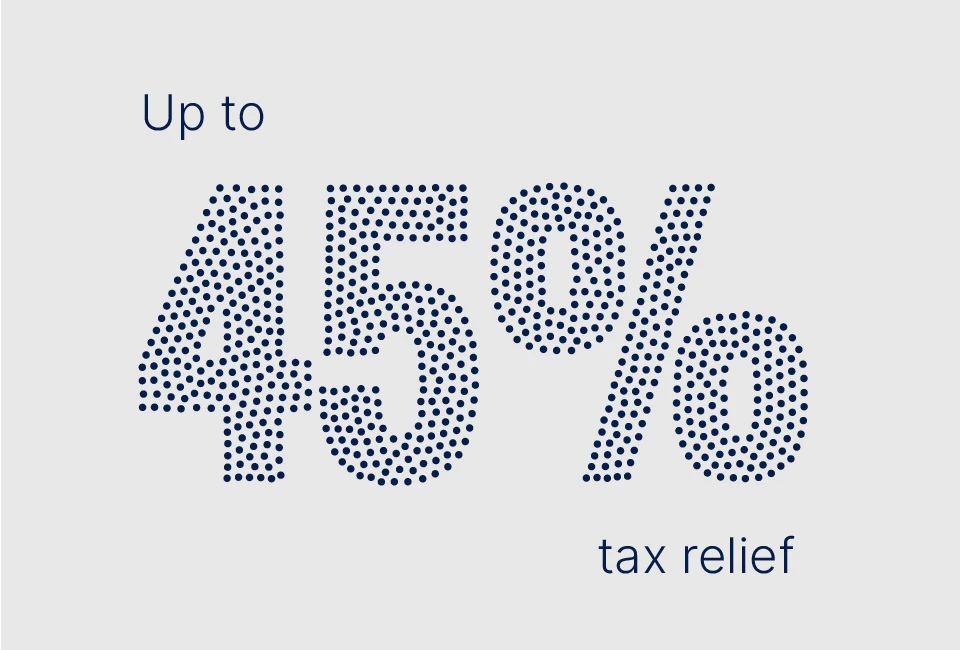
And get up to 45% tax relief in your pension each tax year.
Pass on wealth tax efficiently
Pensions can be passed on free from income and Inheritance Tax (IHT). Although IHT pension rules are set to change in 2027.
Pension and tax rules can change and benefits depend on your circumstances. Rates and bands for Scottish taxpayers may be different. Investments can rise and fall in value, so you could get back less than you invest.
Not sure how much to pay into your pension? Here we explore what to consider when deciding how much to contribute, and why it pays to start early.

We look at the reasons why you should consider paying into your pension even if you’ve already taken money out or stopped working.

Best Buy Pension
Boring Money Awards 2026
Best For Investment Research
Boring Money Awards 2026
Best For Customer Service
Boring Money Awards 2026
Take a look at our most frequently asked questions for quick answers.
If you need more assistance or have specific questions, please contact us.